
What you notice first
Calls come in a few shapes. A whole zone sprays weak and the heads barely reach where they used to. Or it is the ground: a soggy patch that never dries, or a strip of lawn much greener than everything around it. Or it follows the weather, with an exposed backflow assembly or a controller that took a hit in a cold snap or a hailstorm.
The useful question is whether water is going somewhere it should not, or not going where it should. A weak zone and a soggy patch are different problems with different fixes, and we sort out which one you have before we quote anything.
Pressure is the first thing we measure
We put a gauge on a hose bib with a hose-bib adapter and take the reading at the time your irrigation system normally runs. A reading taken when nothing is running tells us little about why a zone will not reach the fence, so we want it under real demand.
Then we check that the irrigation isolation valve is fully open. A valve open only partway starves everything downstream and looks like a pressure failure when the pipe is fine. Ruling that out first saves a lot of wrong diagnosis and unnecessary digging.
If pressure at the bib is fine and one zone is still weak, the problem is downstream of the gauge and that is where we go next.
Soggy ground and the leaks under it
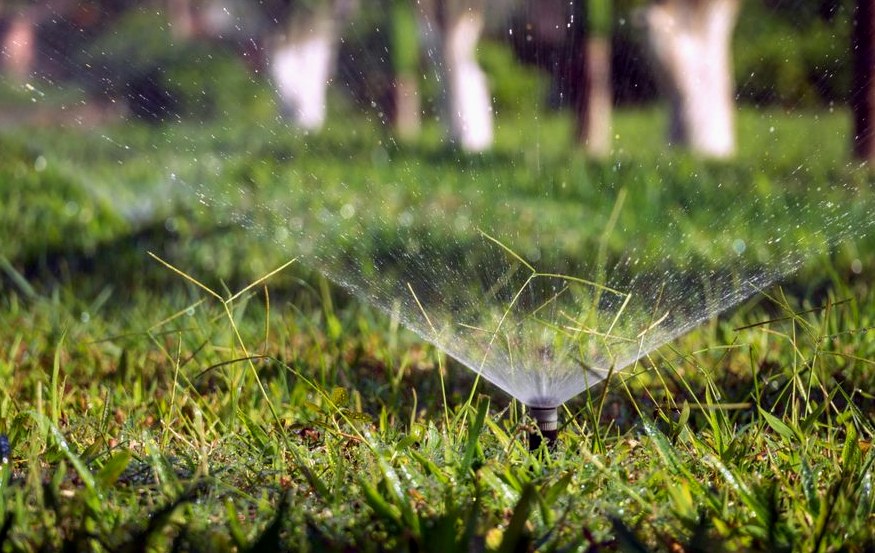
Persistent soggy ground, or a lush patch in an otherwise dry yard, usually points to a buried leak. The water is going into the soil instead of out of a head, so nothing above grade looks broken, and the lawn ends up taking the water you are paying for.
We walk the property and mark the wet and lush areas before we dig anywhere. Winter freezes here are periodic, and the freeze and thaw movement that comes with them is hard on buried pipe and fittings, so a line that behaved all summer can show a problem after a cold stretch.
Cold weather and hail leave their own damage
Winter average lows in Denton run near freezing, which is cold enough to threaten anything above ground. Exposed backflow assemblies and other above-ground irrigation plumbing need protection before cold weather arrives. A cracked assembly is a repair nobody plans for in spring.
Hail is the other hazard. Denton has had softball-sized hail that damaged thousands of homes. After a severe storm, we check exposed irrigation controls and equipment for impact damage, even if the system still seems to run. So a repair visit covers the above-ground plumbing and controls as well as what is under the lawn.
What the visit costs
The minimum service charge for an irrigation repair visit is $50 to $150. That covers the visit and the diagnosis: the pressure reading, the isolation valve check, and the walk for soggy and lush ground. Call us and we can give you a typical range on the phone. We confirm the exact number once we have seen the job.
What pushes a job above the minimum is what the diagnosis finds: a buried leak that has to be located and dug to, parts to replace, how much ground has to be opened, freeze damage to a backflow assembly, or hail damage to controls. A valve that was not fully open, or a problem we can find and confirm quickly, keeps it near the bottom.
We give you the number before we go past the diagnosis and tell you plainly what we found. If it turns out to be something small you can handle yourself, we will say so.
How long the work takes
When the problem is at the surface, such as a valve that needs attention or a pressure issue, the repair is the short part. A buried leak is a different afternoon, because locating the water can take longer than fixing it.
The clock moves with how much digging is involved, how easy the isolation valve is to reach, whether the right parts are on the truck, and the weather. We will not guess at a duration until the gauge and the ground have told us what we are dealing with. When you call, tell us what you have been seeing, whether weak zones, wet spots, or a controller acting up, and we will start there.
What to Expect to Pay
Typical jobs fall somewhere in these ranges, and we'll explain what moves a price up or down.
$100–$400
Related Services
Our Process
Put simply, the work goes like this:
- Review the controller’s zones and schedules, then use its test-cycle setting to operate the system.
- Run each irrigation zone individually for about three minutes so it can be observed.
A conversation on the phone is the easiest start, and you'll hear back with a plain answer.