
What breaks on a drip line
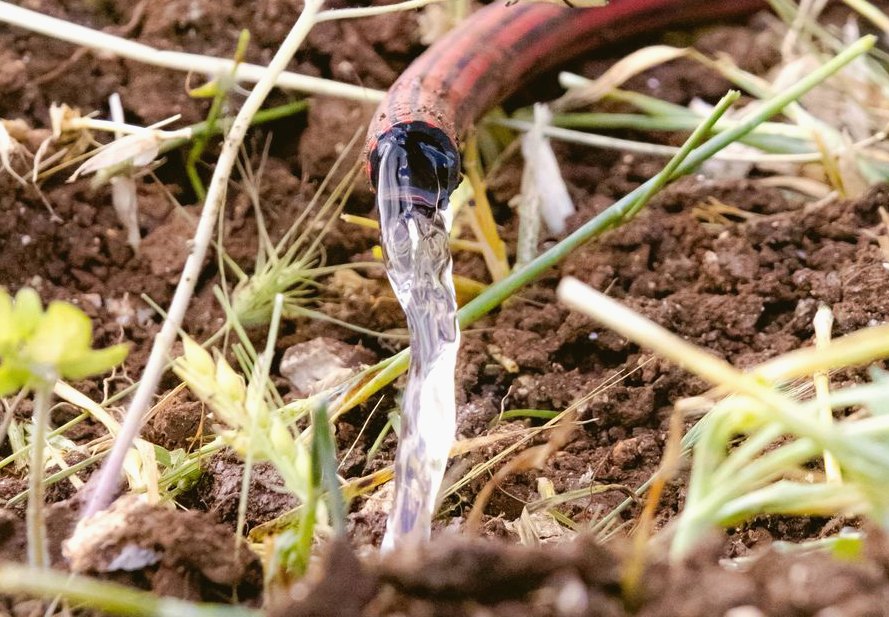
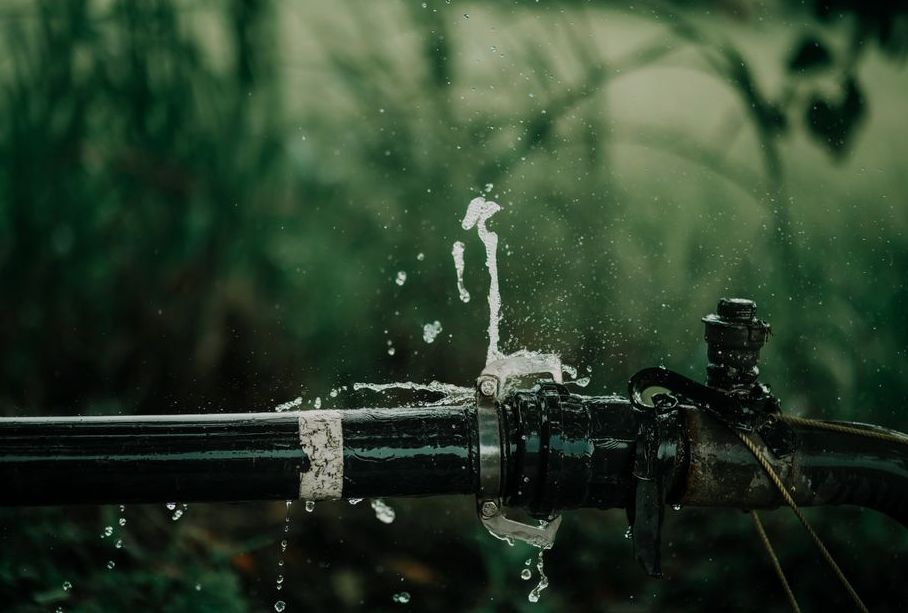
Drip tubing is a separate network from the main irrigation lines, and it fails in a few predictable ways. The most common are a cracked or split section of tubing and a coupling that has worked loose. A small puncture is easy to miss, because all you see is a patch of ground above it that stays damp.
Emitters fail on their own too. They clog, pop out of the tubing, or wear out. When one emitter goes, the plant it serves dries out while the rest of the zone runs normally. When the line itself fails, it looks more like a main-line problem: pooling water, soggy ground, or a zone that isn't delivering what it should.
Winter freezes here bring some freeze/thaw movement, and that shifting can stress couplings. It's often why a fitting that held for years suddenly lets go.
Finding the problem
We walk the line with the zone running and watch for water surfacing where it shouldn't. Once we have a likely spot, we expose the line with a shovel or trowel, digging carefully so we don't add damage. We check the couplings first, then the straight runs of tubing for cracks or holes.
Our soils slow things down here. Water moves slowly through the ground, so a leak can show up some distance from the actual break, and we dig where the line is damaged rather than only where the ground is wet. Before you lengthen run times on a zone that looks weak, check it for pooling or soft spots. A leaking line and a scheduling problem need different fixes.
How we fix it
For a cracked or broken section of tubing, we cut out the damaged piece and push a compatible coupler into both cut ends. We seat the tubing firmly and secure the connection if the fitting needs it.
For a small puncture, we remove any emitter that has been put in the wrong spot and press a goof plug into the hole until it seals. No coupler is needed.
We use thread-seal tape on threaded fittings. When the repair is done, we run the zone and watch it before we call the job finished.
What affects the price
The $126 to $252 range covers materials and labor for a typical drip repair. Where a job lands in it depends on how much tubing has to be cut out, how many fittings need replacing, and how many separate problems we find in the same zone. A short section with one coupler is a smaller job than a long damaged run or several breaks on one line. Call with what you're seeing and we'll tell you where your job likely falls, then confirm the exact price after we see the line.
What It Typically Costs
Typical jobs fall somewhere in these ranges, and your written quote is the number that counts.
$150–$300
Related Services
Getting Started Is Simple
Piece by piece, here's what's involved:
- Flush the repaired line with its end open, restore water, and inspect the repair and emitter flow for leaks or uneven delivery.
- Briefly run the drip zone and inspect the line for spray, wet soil, holes, cracks, loose fittings, or emitters with weak or no flow.
Call (940) 304-8736 with whatever details you have, and the decision stays yours.