
We handle sprinkler repair in Denton. Tell us on the phone what the zone is doing and you'll get a ballpark for a head or valve repair. We confirm the exact figure once we're standing at the zone.
Can a plumber fix a sprinkler system, or do you need someone else?
For most sprinkler problems, call an irrigation contractor first. A plumber handles the water lines and fixtures in your house. Irrigation is a separate trade built around heads, nozzles, valves, solenoids and a controller, so a stuck solenoid or a zone that won't hold pressure is our kind of call.
A broken pipe under your slab or inside the house is a plumber's job. The split is usually obvious once you describe what's happening. If water is spraying from a fitting above ground, a head won't pop up, or the controller is acting up, that's us. If your description points to a plumbing leak, we'll tell you that on the call and save you the visit.
This guide pairs with sprinkler head and nozzle replacement. Looking for sprinkler repair in Denton? See every service we offer.
How long does a repair take?
A head or nozzle swap is short work. A valve takes longer, because we shut off the water, open the valve, work on the diaphragm, and then run the zone to confirm it seals and sprays right.
Access is what stretches a job. A valve box packed with soil or roots, or a head buried in a dense shrub, adds digging time. We won't rush the job if rushing means cracking a pipe or tearing up roots. If we hit something that changes the timeline, we tell you what it does to the price before we keep going.
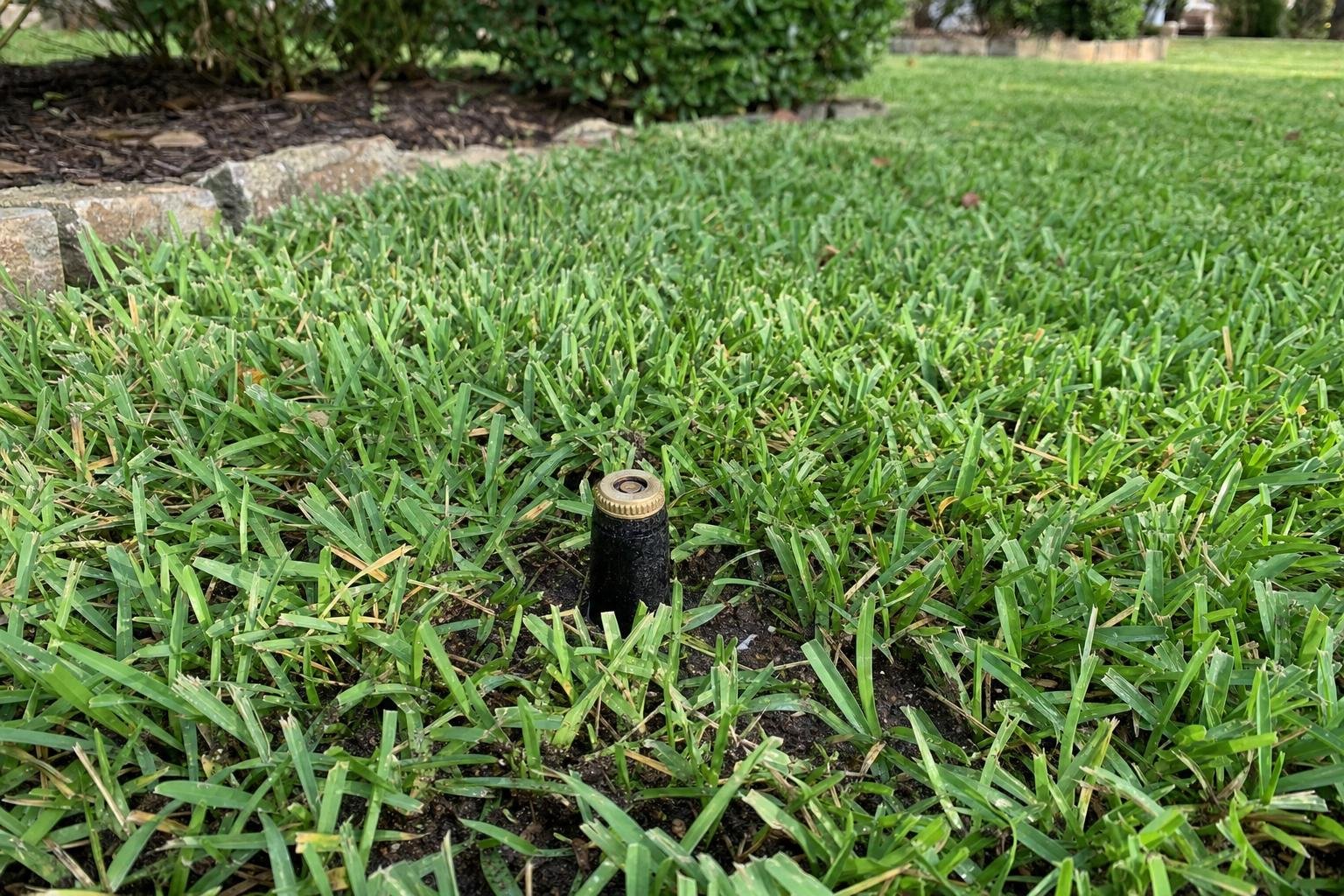
What we do when we come out
First we run the system and watch each zone. That shows us which heads are weak, which zones won't come on, and whether the trouble is in one spot or spread across the system. A head that sprays wrong could be a clogged nozzle, a cracked body, or a nozzle set to the wrong arc, so we look before we replace anything.
When a zone won't activate, we check the controller output first, then the wire connections at the valve, then the solenoid. We don't replace parts on a guess. For a weak spray pattern, we pull the nozzle and screen, rinse them, flush the zone, and reinstall them, or fit the right replacement nozzle. For a valve that leaks or won't shut off, we shut off its water supply, open it, and inspect the diaphragm for debris or damage. Then we clean it or replace it.
When we finish, we run the zone again and check that the spray is even and the pressure holds. If we spot something else while we're there, we point it out and put it on the quote. We don't just do it.
What sets the price on a head or valve repair
Head replacement runs $60 to $80 and valve repair or replacement runs $70 to $275. The wide valve range comes from what actually failed. A diaphragm with debris under it cleans up and lands at the low end. A damaged diaphragm, or a valve that needs replacing outright, pushes the price up.
Digging adds to it. If the valve box has filled with soil or roots, clearing it takes time. A head that's easy to reach stays near the bottom of its range.
Our quote is on paper and agreed before the first tool comes out. Anything that turns up mid-repair and adds cost gets explained to you, and we wait for your approval before doing it.
When is an older system better replaced than repaired?
If your system is original to a house from the 1990s, it's likely decades old. Denton's median home was built in 1995, and many of the systems we dig into date from then. Winter lows here sit near freezing, which is hard on exposed pipe and fittings over the years.
One repair on an old system sometimes shows you the next weak spot. You fix one zone, and another acts up later. When that's the pattern, we'll tell you whether another repair makes sense or whether you're paying for a string of small fixes. If a valve fix will hold, we'll do the valve fix. We won't push a full replacement.
What to note before you call
Pay attention to the wet spots. The Slidell soils around Denton drain very slowly, so water pools and runs off even when nothing is broken. A soggy patch isn't always a leak. Note whether it appears only after a zone runs or sits wet regardless, and tell us which zone feeds that area.
If there was a recent hailstorm, look over the controller and any exposed equipment for impact damage. Softball-sized hail has hit this area before. Jot down the date of the storm or the cold snap, because it helps us narrow down the cause.
On the call we ask which zone, what it's doing, and when it started, then tell you what that repair usually runs and book the visit. Not knowing the cause is fine. Finding it is our job once we're at the zone.
Pricing Ranges
These are typical local ranges for this kind of work, and you get a written price for your own job before you commit.
$90–$450
$100–$350
$35–$70
Related Services
Reach us at (940) 304-8736, and you'll get a clear answer.
Updated October 2026