
Telling a buried leak from a head problem
A broken head throws water where you can see it. A leaking pipe does not. The controller runs its programs and the valves click open and shut, yet one zone is weak or one strip of ground stays spongy. When that is the pattern, the loss is in the pipe between the valve and the heads, or in the mainline feeding the valves.
On sloped lots in Denton you may also see runoff that does not match what the heads are putting down. That usually means water is escaping the pipe before it reaches the surface.
Finding the break before we dig
We confirm first that the problem is in the pipe and not in a valve, a head or the wiring. Then we run the zone and watch what the heads do. Weak pressure, or heads that do not come up, points to a loss upstream of them. From there we work along the path the pipe should take and check the ground over it.
The soil on many Denton lots is very slowly permeable, so leaked water tends to run along the trench and surface at a low spot instead of soaking straight down. The wettest patch can sit several feet from the actual break. We use that when we decide where to dig, so we open the ground over the pipe and not just where the surface looks worst.
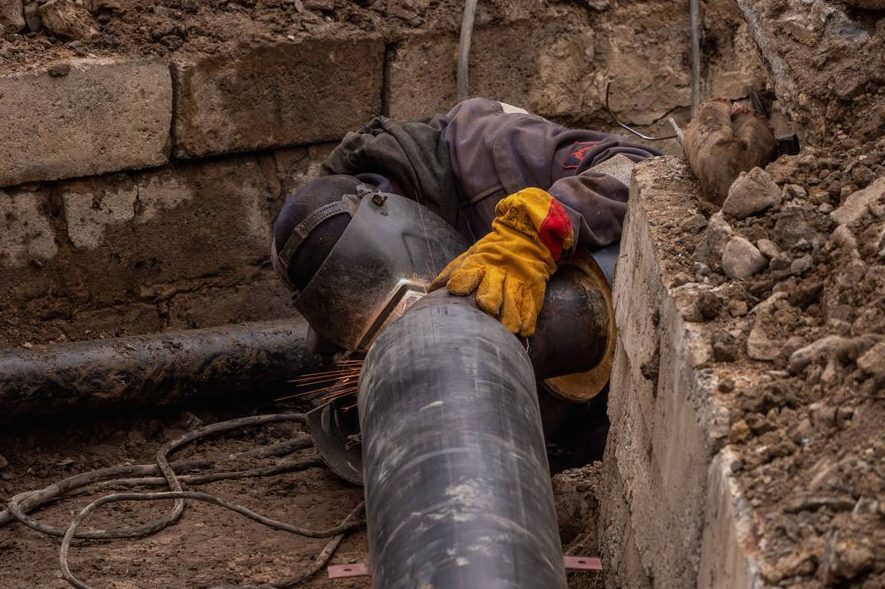
The repair underground
We expose the pipe with a shovel, working by hand near the line so we do not cause a second break. We cut out the damaged section with a PVC cutter or a hacksaw. What goes back in depends on the pipe.
On PVC we apply primer and then cement to the mating surfaces, assemble the fitting with a quarter-turn and hold it in place while it grabs.
On poly pipe we insert a correctly sized barbed coupling into each cut end and tighten stainless-steel clamps over the barbs. The coupling has to match the pipe size, and the clamps sit on the barbs, not out on the bare pipe.
We backfill once the connection is solid.
What a buried pipe repair costs in Denton
A simple poly coupling repair runs about $150 to $250 locally. How much pipe we have to expose, and whether the line is PVC or poly, are what move it from there. The quote is written before we start digging.
Pricing Ranges
These numbers are a reasonable place to start, and the final price goes in writing before anything starts.
$300–$600
$120–$400
Related Services
What to Expect
Spelled out, it tends to involve:
- Run the suspected irrigation zone and look for bubbling water, unusually soft or saturated soil, pooling, or a pressure drop; mark the suspected break and shut off the water before digging.
- Carefully excavate the marked area until the damaged pipe is exposed, leaving working room around the section.
Call us with the details you have, there's no commitment.